
About
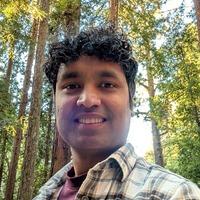
Kishore Karthikeyan is an Architect at NVIDIA, leading the design of NVIDIA's AI-native Kubernetes platform and its broader Kubernetes ecosystem. His work spans the cloud native infrastructure stack, including workload identity with SPIFFE/SPIRE, sandboxed runtimes like Kata Containers, and secure GPU workload orchestration. He focuses on making isolation and identity work together so AI workloads can run securely at scale.
Session
Agents on Edge: Agentic access with K8s on DGX Spark
TalkThursday, December 3 · 9:45 AM–10:10 AM · Acacia 5Full agenda →
AI agents that manage Kubernetes usually hold a powerful, long-lived kubeconfig. This session shows how to remove it, so that every agent action uses a short-lived identity, is limited by RBAC and is recorded in the audit log under the agent's name, even on an edge system without a reliable network connection. Most AI deployments of the Kubernetes MCP server give the agent a kubeconfig or a long-lived service account token. That credential outlives the session, and any code the agent runs can read it. This talk replaces it with Keycloak, running locally on a single-node edge cluster on an NVIDIA DGX Spark where the uplink cannot be relied on. AI agent gets a short-lived JWT-SVID from a local SPIRE server and uses it to authenticate to Keycloak through federated client authentication. Keycloak issues a token whose audience is the MCP server, following the MCP authorization specification and Keycloak's MCP integration guide. The MCP server never forwards that token to the Kubernetes API. It exchanges it with Keycloak for a token that the API server accepts through its OIDC authentication configuration, with the agent's SPIFFE ID as the Kubernetes user name. RBAC limits each agent, the MCP server configuration blocks Secrets and destructive verbs, and the Kubernetes audit log records every call under the agent's identity. Partway through the demo the uplink is disconnected to show what keeps working with Keycloak and SPIRE on the node. The talk closes with the edge-specific problems met along the way, including key caching while offline and clock skew, and with how the same Keycloak configuration carries over from one node to a fleet of edge clusters.
Speaking at
- View event →
Cloud Native AI Summit — Paris
December 1–3, 2026